An updated Comprehensive Plan will help guide development as Foley moves into the future.
The plan was recently adopted by the Foley Planning Commission. The new plan upgrades guidelines approved in the 2008 Comprehensive Plan and 2022 Foley Forward Plan.
In a discussion with the Foley City Council, Wayne Dyess, Foley executive director for infrastructure and development, said the new plan will help the city prepare for change.
“We believe this comprehensive plan acts as a blueprint for high quality growth by ensuring development occurs in the appropriate locations and reflects the intended context, character and development pattern” Dyess said. “It also establishes a development process that is transparent and predictable, with clear standards and expectations that allow applicants, residents, and decision makers to understand what is required and how decisions will be made.’”
Mayor Ralph Hellmich said the plan will help developers understand what is expected before they propose new projects in Foley.
“That’s the kind of guidance that a plan like this gives developers up front before they even bring us a project,” Hellmich said. “It’s important, and this will help the Planning Commission.”











The plan will guide quality of life, sense of place, transportation, connectivity, sustainable and balanced growth, environmental stewardship and predictable development as Foley continues to grow.
Shawn Mitchell, Foley planning manager, said the new plan does not just look at zoning – where to put residences or commercial development – but also where to concentrate growth and promote concepts such as mixed use and connectivity.
One basic idea of the plan is to concentrate the greatest density at the center of Foley and reduce the intensity of development farther from the city’s core.
“As you go from highest density and intensity of uses, in downtown core, and move out from the periphery, density and intensity should decline,” she said. “Whenever we’re looking at proposed developments, you’re looking at that. If you’re close to the center, it makes sense that you have higher density, multi-family, mixed use. Then, as you move out, you should have larger lots and a more rural character.”
She said Foley has always had good street plans dating back to the town’s original layout more than 100 years ago.
“We relied heavily on the downtown model and the way things were laid out in the original Foley plan,” Mitchell said. “Whenever we’re planning new nodes along 59 or along the Foley Beach Express, they should follow some of the same principles that we see downtown. So transportation oriented, compact grid, street layout, mixed residential-commercial use, lots of open civic spaces, that sort of thing.”
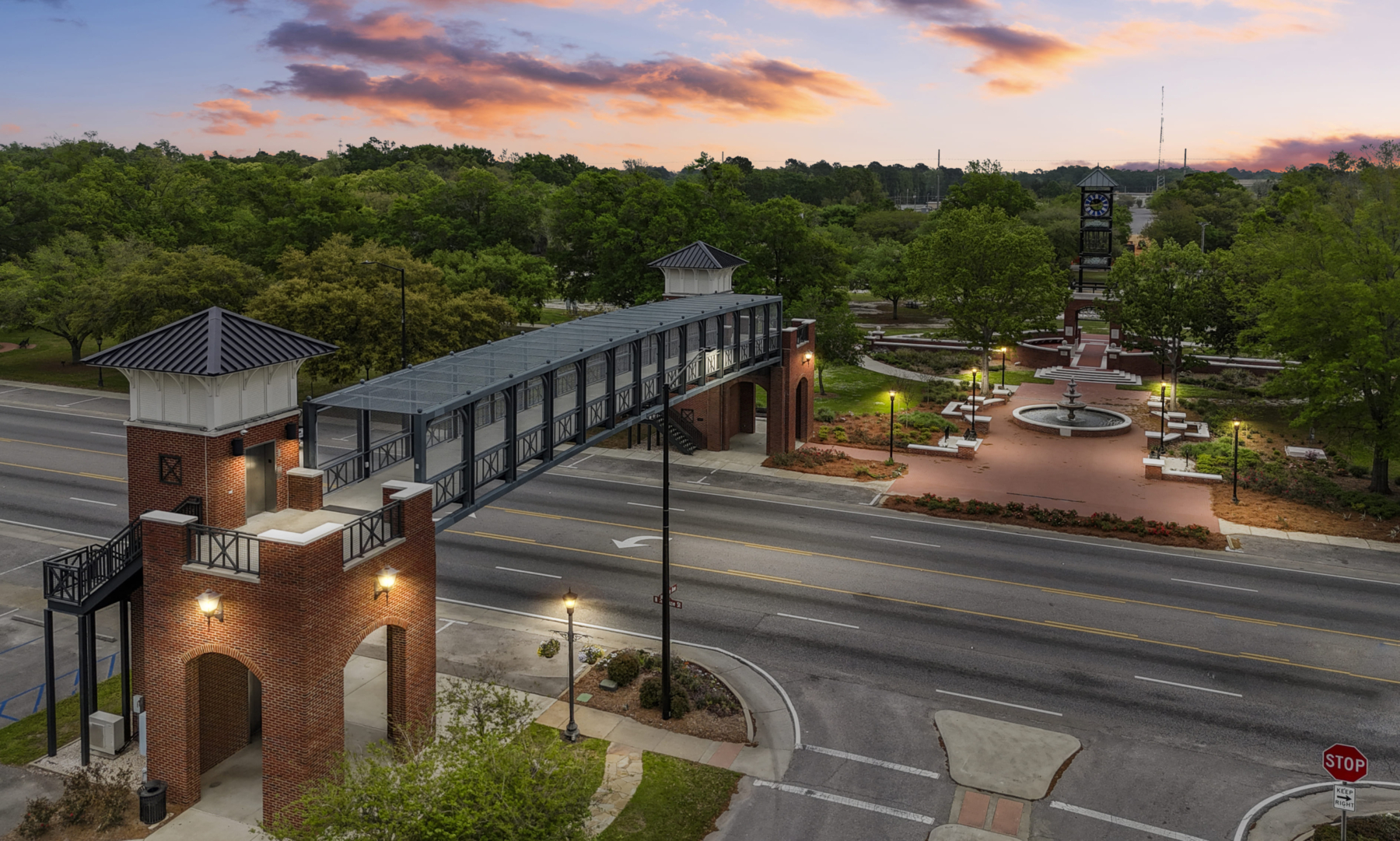
Current city projects continue to promote downtown development along the original plans. Civic construction such as the new library and improvements on South Chicago Street promote concepts such as civic space, open spaces, parks and connectivity.
The Comprehensive Plan also promotes pedestrian connectivity with a variety of attractions within a five or 10-minute walk in the central area.
The flow of vehicle traffic is also part of the plan.
“We want to try to facilitate connectivity that cuts down on traffic, that improves emergency response,” Mitchell said. “We’re working closely with the Engineering Department to envision what streets should look like. Because you don’t have the same kind of street in the middle of a subdivision that you find in the commercial mixed-use core.”
Dyess said the Comprehensive Plan will help the city guide change in upcoming years.
“This Comprehensive Plan will not only guide high-quality growth well into the future, but it will also provide a clear framework for ongoing implementation evaluation through measurable performance metrics that help the city assess how the plan is being implemented,” Dyess said. “Importantly, the plan also serves as direction for municipal public projects and capital improvements by establishing the public realm expectations that coordinate with private development, enabling an integrated approach that produces a consistently high quality environment in areas such as downtown and other key corridors and centers. Finally, it provides an implementation roadmap that will inform future amendments to the Zoning Ordinance, Subdivision Regulations, and the Technical Design Manual to ensure the city’s regulations and standards align with the plan’s adopted land use and character vision. This Comprehensive Plan, as the city’s primary land use planning document, directly stemmed from the city’s Strategic Plan adopted last year and was advanced specifically as a core initiative under the Liveable Communities Objective.”
About The Author