
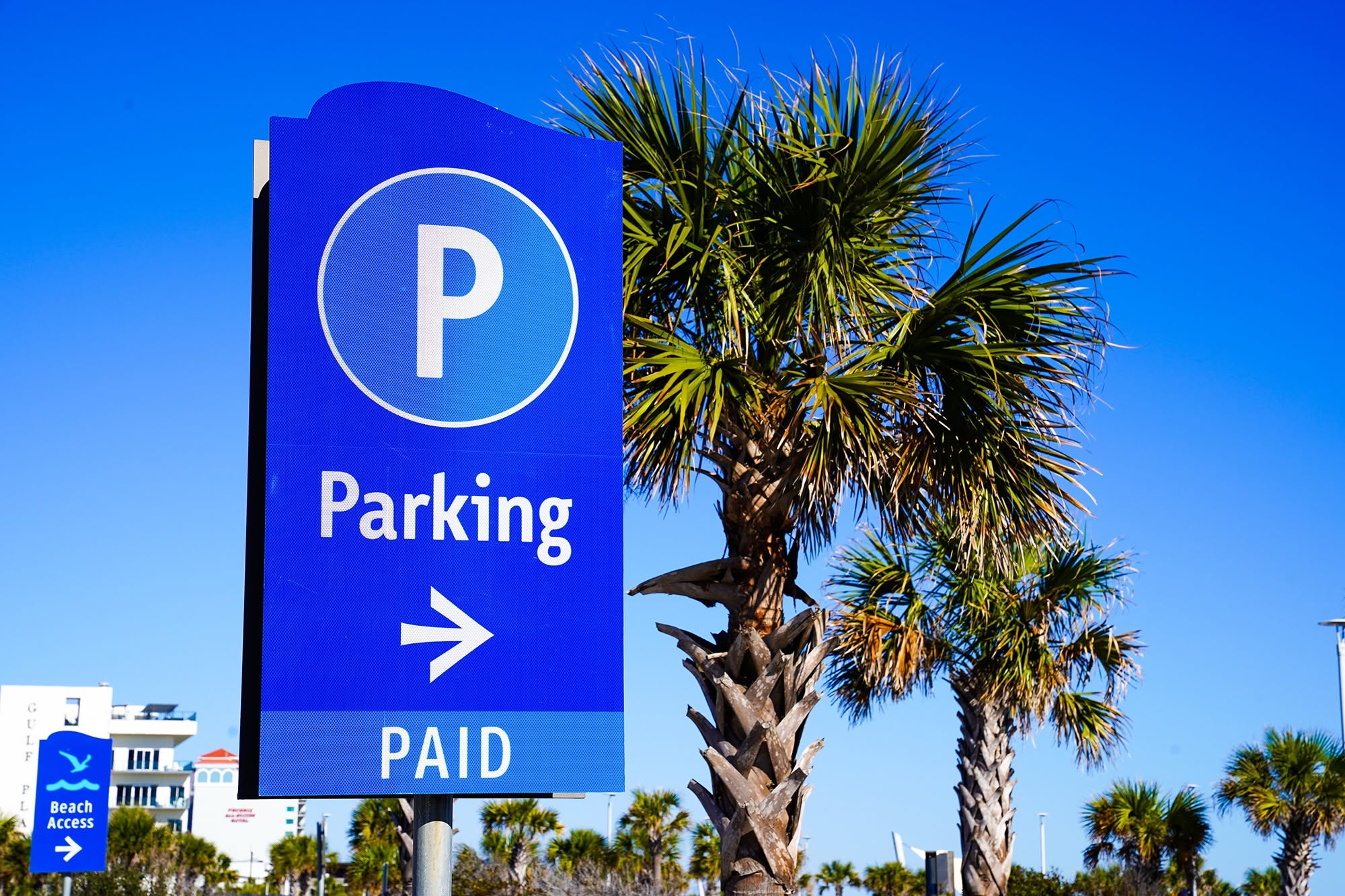
The Gulf Shores City Council recently reviewed a proposed overhaul of the city’s resident beach parking and registration system during a work session presided over by Temporary Chair Jason Dyken. Transition to Automated License Plate Recognition Under a plan presented by Chief Netemeyer, Gulf Shores intends to phase out physical resident parking re-stickers by January 1, 2026. In their place, the city is evaluating specialized third-party parking management software to enforce exemptions through automated license plate readers. (Note: City officials clarified that specialized parking software, rather than Flock cameras, is under consideration.)
Key components of the proposed parking policy include:
- Two-Year Resident Exemptions: Resident parking exemptions will be linked directly to vehicle license plate numbers and remain valid for two years.
- Head-In Parking Mandate: Drivers will be required to pull forward into beach parking spaces rather than backing in to ensure license plates are visible to enforcement scanners.
- Booting Penalties: Updated ordinance provisions would establish official fee structures for vehicle boot removal.
Registration Access and Enforcement GoalsTo facilitate enrollment, the city plans to offer three registration pathways:













- Digital Portal: Residents can submit driver’s license and vehicle registration documents online.
- In-Person Processing: Registration will be handled on-site at the Justice Center.
- Mobile Outreach: A mobile command bus will deploy to neighborhood events to assist residents.
The primary intent of the updated system is to ensure full-time residents retain exclusive access to designated resident parking zones and receive full parking fee exemptions across municipal lots. Unauthorized parking remains a persistent issue, with approximately 2,500 citations issued as of March.
Public Discussion on Residency Criteria:
The work session prompted debate regarding eligibility requirements. Currently, resident exemptions require a local driver’s license or vehicle registration. Part-time residents and non-resident property owners requested flexible verification options—such as tax records or utility bills—to avoid paying daily parking rates. City leaders noted that while the focus remains on full-time residents, community feedback will be evaluated prior to formal ordinance votes.
About The Author