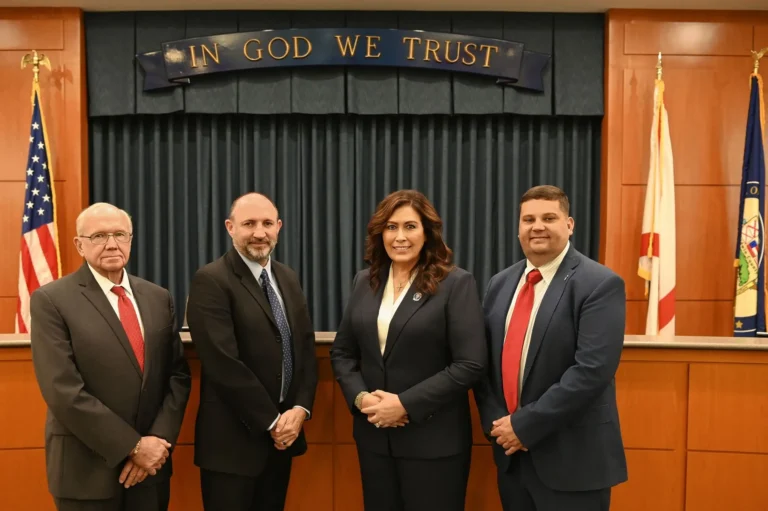
Foley’s commitment to downtown revitalization and community support took center stage as both Foley Main Street and the City of Foley received prestigious statewide honors at the thirteenth annual Main Street Alabama Awards of Excellence Banquet. The awards, originally presented last month in Enterprise, Alabama, were celebrated locally during the Foley City Council meeting on September 8, 2026.
A 15-Year Vision Realized:
The City of Foley was honored with the Public Space Improvements Award of Excellence for its transformative East Jessamine Street Improvement Project. The initiative marks the culmination of a 15-year vision aimed at creating a safer, more walkable, and highly connected downtown corridor. Designed as a “complete street,” the project serves as a welcoming gateway to Foley’s downtown district, linking key local landmarks including City Hall, the Library, and Riviera Utilities to Heritage Park and the Alabama 59 Pedestrian Bridge.
Key design features of the project include:
- Symmetrical walkways centered around the Centennial Clock Tower.
- Decorative lighting and classic, traditional brick architecture.
- Integrated traffic-calming measures, including mid-block crossings and context-sensitive lane widths to ensure pedestrian safety.
Completed in May 2025, the project stands as a model of strict fiscal responsibility. Despite design adjustments implemented to support local business owners during construction, the entire development was successfully delivered under its total budget of $524,965.













Boosting Small Businesses:
“Skills for Success” ProgramFoley Main Street earned the Business Development Award of Excellence for its impactful “Downtown Forward Skills for Success” training program. Developed in collaboration with the Auburn School of Business staff, the initiative provided personalized, small-group soft skills training to 90 local business employees and owners. The program was designed to help downtown small businesses grow, thrive, and cultivate lasting customer loyalty.
To make participation as accessible as possible, Foley Main Street implemented creative community partnerships:
- Flexible Scheduling: Sessions were offered once in the morning and once in the evening to accommodate diverse retail and restaurant work shifts.
- Childcare Support: A partnership with the First Foley Baptist Church ensured on-site babysitting was available to attendees.
- Local Catering: The program utilized downtown restaurants to provide breakfasts and dinners.
All 90 participants received copies of the leadership book, This Is Day One: A Practical Guide to Leadership That Matters by Drew Dudley, which defines leadership as a daily, values-driven practice accessible to everyone.
Honoring Hometown Heroes
The celebration also shined a spotlight on local dedication. Darrell Russell and the City of Foley Public Works team were named Foley’s “Main Street Heroes” at a special Toast to Heroes Reception sponsored by Regions Bank. The award recognizes the team’s hands-on support in bringing Foley Main Street’s creative concepts to life. “What truly sets the Foley Public Works team apart is not just their workmanship, but their character,” said Wes Abrams, President of Foley Main Street. “Their positive attitude makes them a joy to work with for business owners as well as Foley Main Street.”
In a surprise presentation, Alabama State Representative Frances Holk-Jones honored the community by presenting two official House of Representatives Resolutions. The first honored Darrell Russell and the Public Works Department for their Hero recognition, while the second celebrated Foley Main Street’s official National Accreditation.
The Impact of Main Street
Reflecting on the success of the programs, Wirth noted, “The night was a wonderful reminder of why this work matters. It is an honor for me to present the awards and seeing the pride each community has in its Main Street district was truly inspiring.”
Main Street Alabama, a statewide non-profit, focuses on leveraging public-private partnerships and community engagement to spur jobs, investment, and growth in commercial districts. As local leadership highlighted, programs like these are far more than beautification efforts; at their core, they act as critical economic development tools that enhance the local tax base, foster entrepreneurship, and build lasting community partnerships.
About The Author